Featured Project
Sweeftly
Africans and other minority cultures find it difficult to shop cultural items and food ingredients in the United Kingdom. Sweeftly aims to solve that problem. With African-carribean based shops all across the United Kingdom, all people need to do is click, buy and have it delivered to them in the shortest time possible.
Industry
E-commerce
Client
Sweeftly
Timeline
2024 - 2025
My Services
Lead Product Designer. UX Strategist Interface Designer Digital Illustrator
Key Highlights
While specific figures are NDA-protected, the qualitative outcomes were clear: - Onboarding speed: Vendors could import large catalogues in one session rather than one-by-one entry, increasing speed and reducing data errors (thanks to the CSV flow and validation). - Ease of shopping: Customers could come onboard quickly and see their favourite stores and shop easily. - Operational reliability: The size-to-package tier mapping reduced pricing mismatches and delivery friction, improving handoff confidence and customer trust. - Checkout efficiency: The 3-step journey lowered time-to-order and simplified recovery from errors, supporting a smoother conversion path across devices. - Team velocity: Regular designers-developers rituals and a shared component/system mindset shortened feedback loops and kept the experience consistent across web, mobile, and admin.
The Challenge
Sweeftly aimed to create a cultural and location-based e-commerce platform that connects users with nearby vendors for faster, more localized shopping and delivery. Early user interviews and stakeholder discussions revealed two key challenges: 1. User pain points: The existing apps didn't cater the shopping experience of natives (users from other cultures) 2.Vendor Sales: Vendors only sold to existing customers and hoped that they would refer them or come across new customers. The goal was to design a seamless shopping experience that solves these problems for both customers and vendors.
The Approach
Leading the product research and design team, we - Interviewed stakeholders and captured user goals and pain points; we looked for users with similar pain points, mapped where our competitors had time and cognitive load spiked for shoppers and vendors. - Prioritization by impact: We defined and outlined out the minimal set of features needed to deliver success for each persona (customer, vendor, admin/rider ops). - Outlined the shortest path to done, ultimately shaping a 3-step purchase path. - We had weekly stand-ups and async handoffs with engineering/product to ensure fast iteration and feasibility alignment across responsive web, mobile apps, and admin dashboard.
The Solution
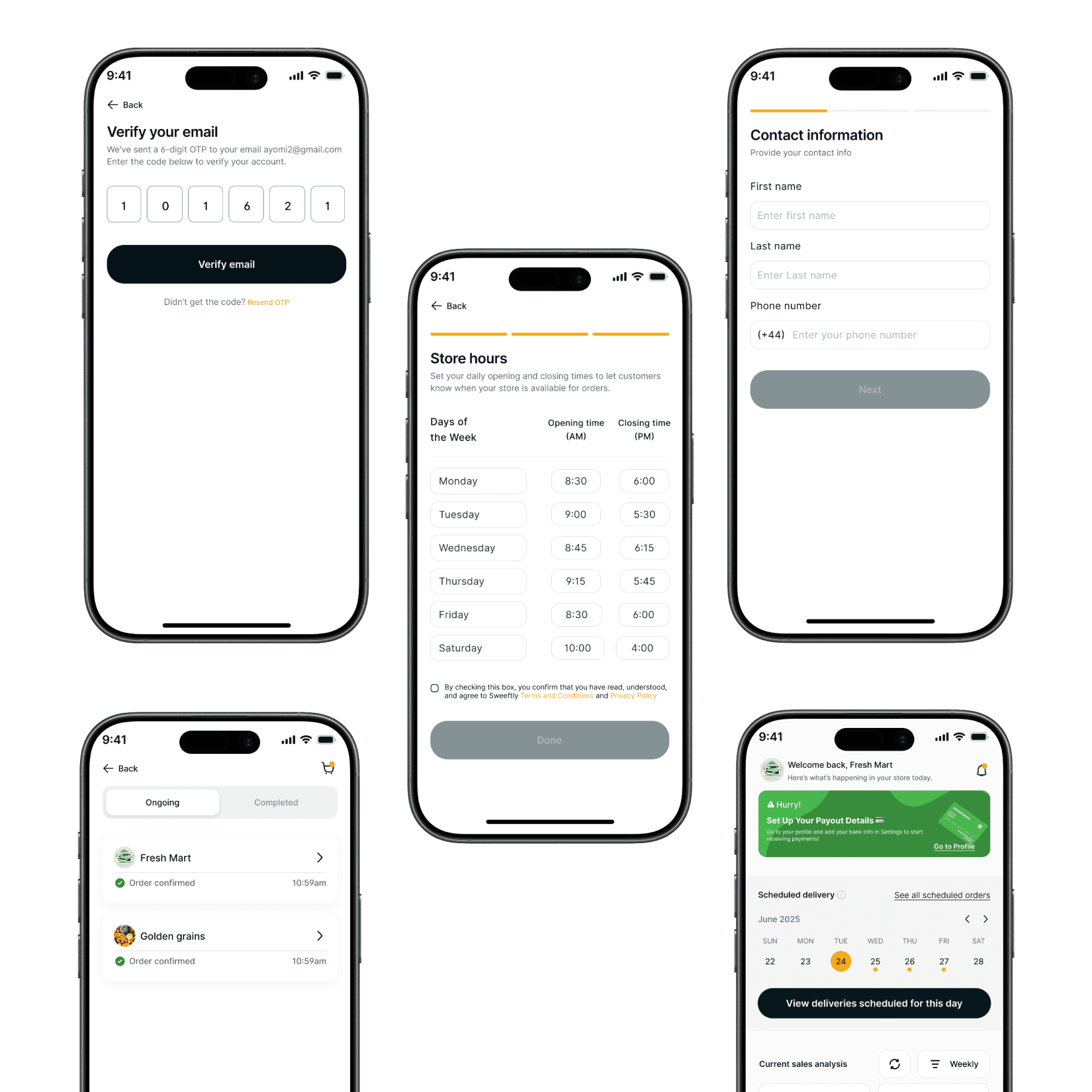
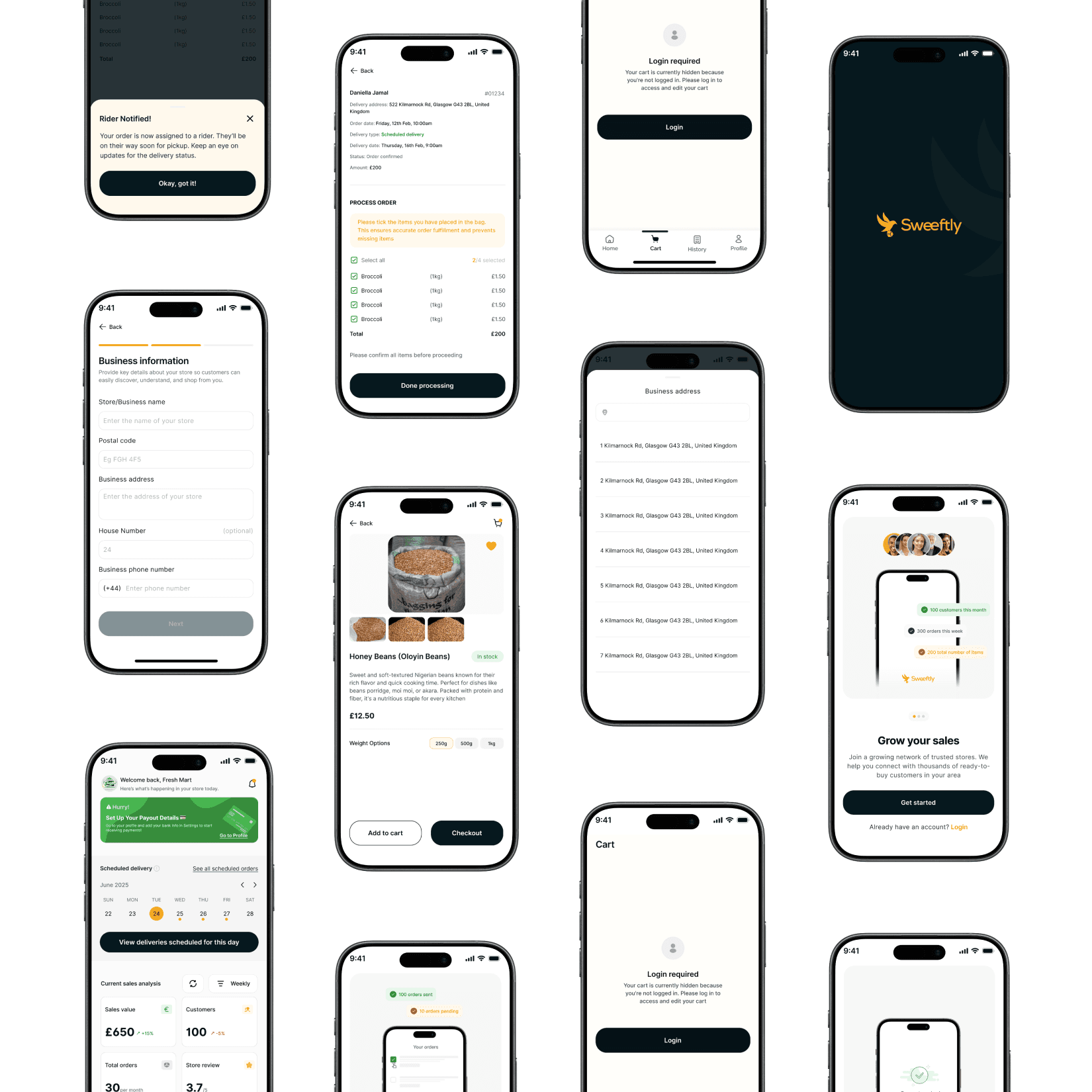
- Customer journey (3-step checkout) - We reduced decision points per screen, front-loaded essentials (availability, price, ETA), and deferred non-critical inputs. - Applied responsive patterns to ensure parity across devices, minimizing context switch and cart drop-off. - Vendor bulk upload (operational unlock) - Introduced a CSV bulk import flow with validation, clear error surfacing, and resumable progress so vendors could onboard entire catalogs quickly. - Provided guardrails (field templates, sample files, inline mapping) to keep data clean without heavy training. - Delivery alignment (pricing & packaging) - Normalized our catalogue to product-size tiers that mapped directly to the delivery partner’s pre-priced package tiers—eliminating ambiguous quotes and failed handoffs. - Embedded the mapping in the order pipeline so price/ETA stayed accurate from Product showcase → checkout → dispatch.